Sick Leave Policy in India: Days, Certificates and ESI
How many sick leave days to give, when to ask for a certificate, how to handle long illness and misuse, and how ESI sickness benefit fits in.
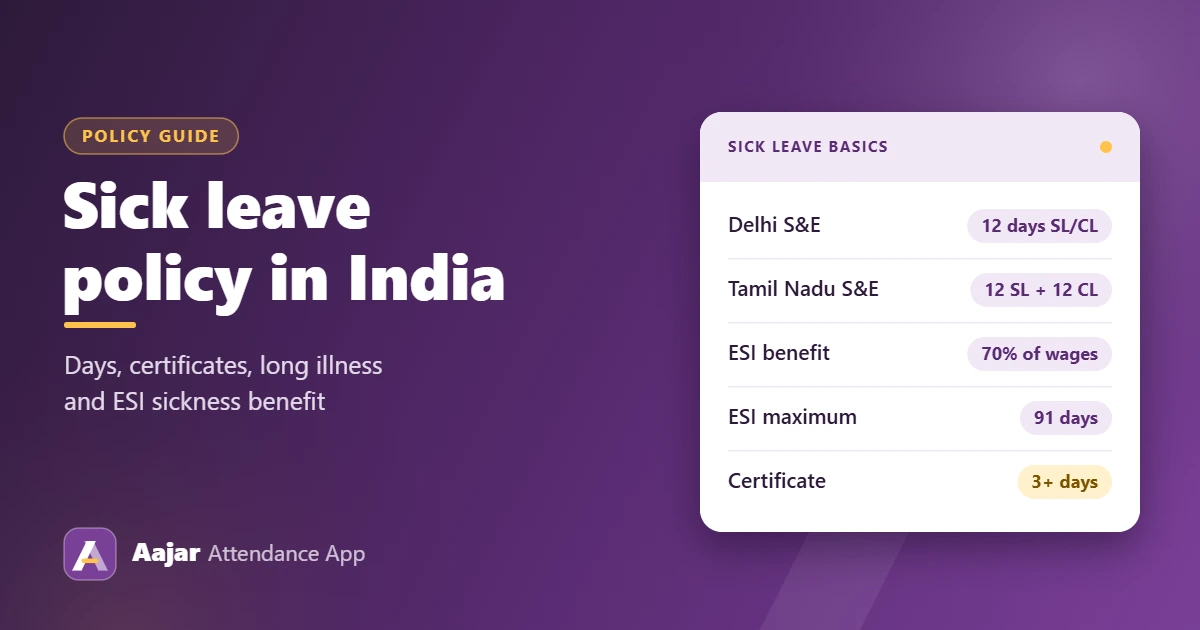
Short answer: Sick leave is paid time off an employee takes when they are ill or injured and cannot work. In India, the number of sick leave days for most private offices and shops comes from your state's Shops and Establishments law and your own policy; Delhi, for example, sets 12 days a year of combined sickness or casual leave, and Tamil Nadu sets up to 12 days of sick leave plus up to 12 days of casual leave. ESI-covered employees can also claim a cash sickness benefit from ESIC.
This guide is for owners and HR teams designing a sick leave policy for a team of 10 to 300 people. It covers how many days to give, when to ask for a medical certificate, what to do about long illness, and how to deal with misuse without punishing genuinely ill staff.
What is sick leave?
Sick leave (SL), sometimes called medical leave, covers days when an employee is unwell, injured or recovering from treatment. It is normally paid at the full daily rate, and is separate from casual leave and earned leave.
Some companies combine sick and casual leave into one balance, often called "sick/casual leave" or "SL/CL". Others keep them apart so that planned personal days do not use up the cushion meant for illness.
How many sick leave days are employees entitled to in India?
There is no single national number for private-sector offices and shops. The minimum usually comes from the state law that covers shops and commercial establishments, and many employers give more in their policy.
Two examples from official sources:
- Delhi: the Delhi Labour Department says employees under the Delhi Shops and Establishments Act are entitled to 12 days of sickness or casual leave in a year (section 22). This is one combined balance.
- Tamil Nadu: section 25(2) of the Tamil Nadu Shops and Establishments Act, 1947 provides up to 12 days of leave with wages for sickness or accident, plus up to 12 days of casual leave, for every twelve months of continuous service.
Rules differ from state to state, and some states have updated their laws or exempted certain establishments. Check the Act and rules for each state where you have staff before fixing your numbers.
How much sick leave do companies usually give?
A common approach among SMEs is 6 to 12 days of sick leave a year, or a combined 12 to 18 days of sick and casual leave. If your state sets a minimum, your policy should not go below it.
Is sick leave paid, and what is ESI sickness benefit?
Company sick leave is usually paid by the employer at the normal salary. ESI sickness benefit is different: it is a cash benefit paid by ESIC to insured employees, not by the employer.
According to the ESIC sickness benefit page, the benefit is 70% of average daily wages, payable for up to 91 days in two consecutive benefit periods. The employee must have paid contributions for at least 78 days in the matching contribution period, and benefit is not paid for the first two days of a spell of sickness (with an exception for a new spell within 15 days of the last one).
ESIC also says that a person joining insurable employment for the first time becomes eligible only after 9 months, and that the prescribed certificates are Forms 7 and 8. The benefit is claimed through ESIC, so the employee needs to be certified by an ESI doctor or dispensary.
| Point | Company sick leave | ESI sickness benefit |
|---|---|---|
| Who pays | Employer | ESIC |
| Amount | Usually full daily salary | 70% of average daily wages |
| How many days | As per state law and policy (often 6–12 a year) | Up to 91 days in two consecutive benefit periods |
| Waiting period | Usually none | First 2 days of a spell not paid (with exceptions) |
| Proof | As per your policy | ESI medical certificate (Forms 7 and 8) |
| Who is covered | All employees under the policy | ESI-insured employees who meet the contribution condition |
To check who in your team is covered and what you contribute, see our guide to ESI calculation. For days where both company sick leave and ESI benefit could apply, agree with the employee which one will be used and confirm the position with your ESI branch office.
How do you design a sick leave policy?
A good sick leave policy is short, fair and easy to apply the same way every time. These are the decisions to make.
Should sick leave be credited upfront or monthly?
Upfront credit (all 12 days on 1 January or on the leave-cycle start) helps someone who falls ill early in the year. Monthly credit (1 day a month) limits the cost if a new joiner leaves soon after taking leave. Many companies credit monthly for the first year and upfront after that.
Can sick leave be carried forward?
That is a policy choice unless your state law says otherwise. Common options are:
- Lapse at year end: unused sick leave expires. Simple, but staff may feel pushed to "use it".
- Carry forward with a cap: for example, up to 24 or 30 days, so long-serving staff have a cushion for serious illness.
- No encashment: most policies do not pay out unused sick leave, because it is meant for illness, not savings.
How should employees report sick leave?
Illness is rarely planned, so advance approval is not realistic. Ask employees to inform their manager before the shift starts, or as soon as possible, and to apply for the leave formally on return. The Delhi Labour Department's summary, for instance, says sickness or casual leave should be applied for "as soon as possible", wording that is easy for staff to follow.
Can sick leave be taken in half-days?
Many policies allow a half-day of sick leave for a doctor's visit or when someone falls ill mid-shift. If you allow it, say how the half is counted against the balance and how it shows in attendance.
When is a medical certificate required for sick leave?
Asking for a certificate every time adds cost and hassle for a one-day fever. A common approach is to set a threshold:
- No certificate for 1–2 consecutive days.
- A doctor's certificate for 3 or more consecutive days.
- A certificate when sick leave is attached to a weekend, holiday or approved leave, if your policy says so.
- A fitness certificate before returning after a long illness or surgery.
For ESI-covered staff claiming sickness benefit, the ESI medical certificate is the relevant document. Keep certificates confidential and limit who can see them. A manager needs to know the dates, not the diagnosis.
What happens during a long illness?
When an illness runs beyond the sick leave balance, the policy should spell out the order in which leave is used. A typical sequence is sick leave first, then earned leave, and finally leave without pay.
Sickness does not break continuous service for gratuity. Section 54 of the Code on Social Security, 2020 treats service as uninterrupted even when it is interrupted by sickness, accident or leave.
For long absences, also plan for the return. Agree on a phased return or lighter duties if the doctor advises it, and keep in touch during the absence without pressuring the person to come back early.
Worked example: a long illness at a 60-person retail chain
A 60-person retail chain in Chennai gives 12 days of sick leave a year, credited at 1 day a month. Ravi, a store supervisor, earns ₹36,000 a month.
By August he has been credited 8 days of sick leave and has used 1, so 7 days remain. His earned leave balance is 5 days.
In August 2026, Ravi is ill and off for 14 working days. The policy applies leave in order:
- Sick leave: 7 days (balance 7 → 0)
- Earned leave: 5 days (balance 5 → 0)
- Leave without pay: 14 − 7 − 5 = 2 days
The company deducts unpaid days on calendar days. August has 31 days, so the per-day salary is ₹36,000 ÷ 31 = ₹1,161.29.
Deduction = ₹1,161.29 × 2 = ₹2,323. Ravi's August salary = ₹36,000 − ₹2,323 = ₹33,677.
Now take Meena, an ESI-insured cashier at the same chain who meets the contribution condition. She is certified sick by an ESI doctor for a 10-day spell, and her average daily wage as worked out by ESIC is ₹600.
Sickness benefit = 70% × ₹600 = ₹420 a day. The first 2 days are not paid, so for 8 days she receives 8 × ₹420 = ₹3,360 from ESIC.
How do you handle sick leave misuse?
Most sick leave is genuine. Treating every absence as suspicious damages trust and can push ill people to come to work, which spreads illness to the team.
Still, patterns are worth a quiet look. Watch for:
- Sick days that repeatedly fall on Mondays, Fridays or next to holidays.
- Sick leave taken soon after a refused casual or earned leave request.
- Balances used up in the same month every year.
If you see a pattern, talk to the employee privately first. There may be a health issue, a family problem or a workload concern behind it. Apply the certificate rule consistently, and use your disciplinary process only when misuse is clear and documented.
Good records make this fair. A leave management system shows sick leave patterns across months without managers keeping their own spreadsheets.
What should a sick leave policy include?
Add a sick leave section to your leave policy template covering:
- Number of days a year, and whether it is separate from or combined with casual leave.
- Credit method: upfront or monthly, and pro-rating for new joiners.
- How and when to inform the manager.
- When a medical or fitness certificate is needed.
- Carry-forward cap, if any, and whether unused leave lapses.
- Order of leave use during long illness, and when leave without pay begins.
- How ESI sickness benefit and company sick leave work together for insured staff.
- Confidentiality of medical information.
Managing sick leave on Aajar
On Aajar, you can add sick leave as a leave type with its own policy and balance, separate from casual or earned leave. Employees apply for it, managers approve it, and balances update on the leave cycle you set.
Approved sick leave shows in the monthly attendance, and payroll is run from the same records, so HR can apply any unpaid days when processing salary. Every plan is free for 3 months for teams of up to 50 users; see Aajar pricing.
Frequently asked questions
Is sick leave mandatory in India?
For many shops and commercial establishments, state Shops and Establishments laws set a minimum, such as 12 days of sickness or casual leave in Delhi. The rules vary by state and type of establishment, so check the law where your staff work. Your policy can give more than the minimum but not less.
Can an employer refuse sick leave?
An employer can ask for proof as set out in the policy, but refusing genuine sick leave that the employee is entitled to may conflict with state law and the employment contract. If the balance is used up, the absence is usually treated as earned leave or leave without pay instead. Apply the same rules to everyone.
Is a medical certificate needed for one day of sick leave?
Usually not. Many companies ask for a certificate only for 3 or more consecutive days, or when sick leave is next to a holiday or weekend. Write the threshold into your policy so managers do not decide case by case.
Can sick leave be encashed?
Most companies do not encash sick leave, because it is meant to protect income during illness. Unused days either lapse or carry forward up to a cap. Earned leave is the type more commonly encashed.
Can an employee get ESI sickness benefit and salary for the same days?
ESI sickness benefit is paid by ESIC, while sick leave salary is paid by the employer. How the two interact for the same days should be confirmed with your ESI branch office. Agree with the employee in advance which one will apply.
This article is general information, not legal advice.
Keep reading
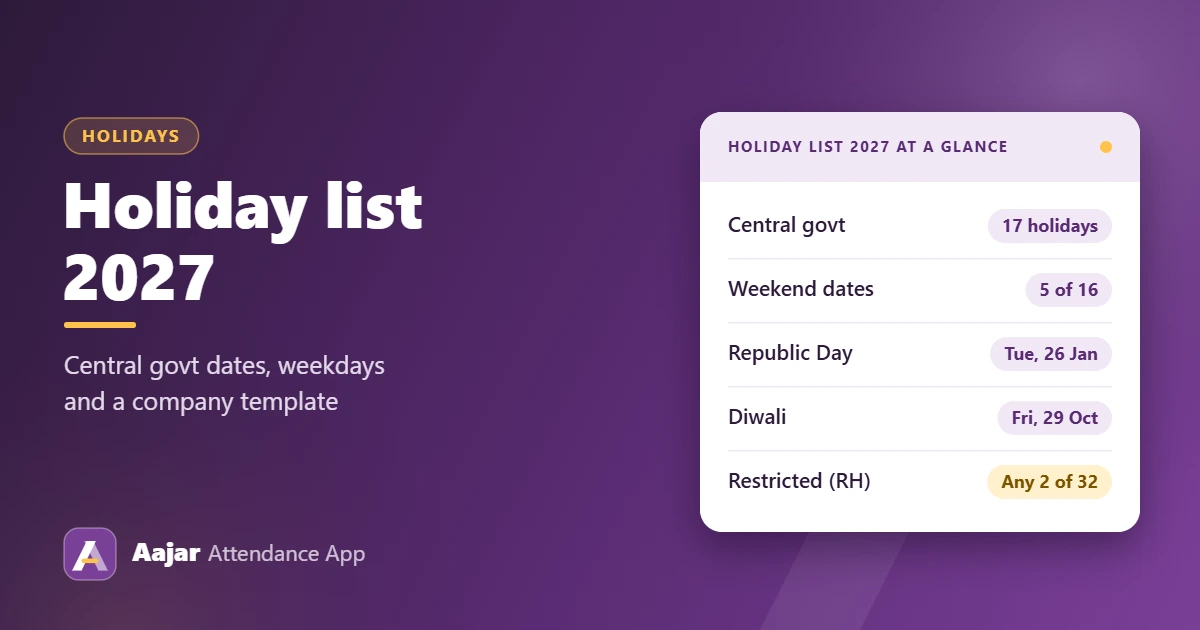
Holiday List 2027: Central Govt Dates and Company Template
All 17 central government holidays for 2027 with weekdays, what is left of 2026, state festival holiday rules and a sample company holiday list template.

Leave Application Format: Letter and Email Samples for Office
Copy-ready leave letters and leave request emails for office, the six parts every application needs, and how to count your leave days.
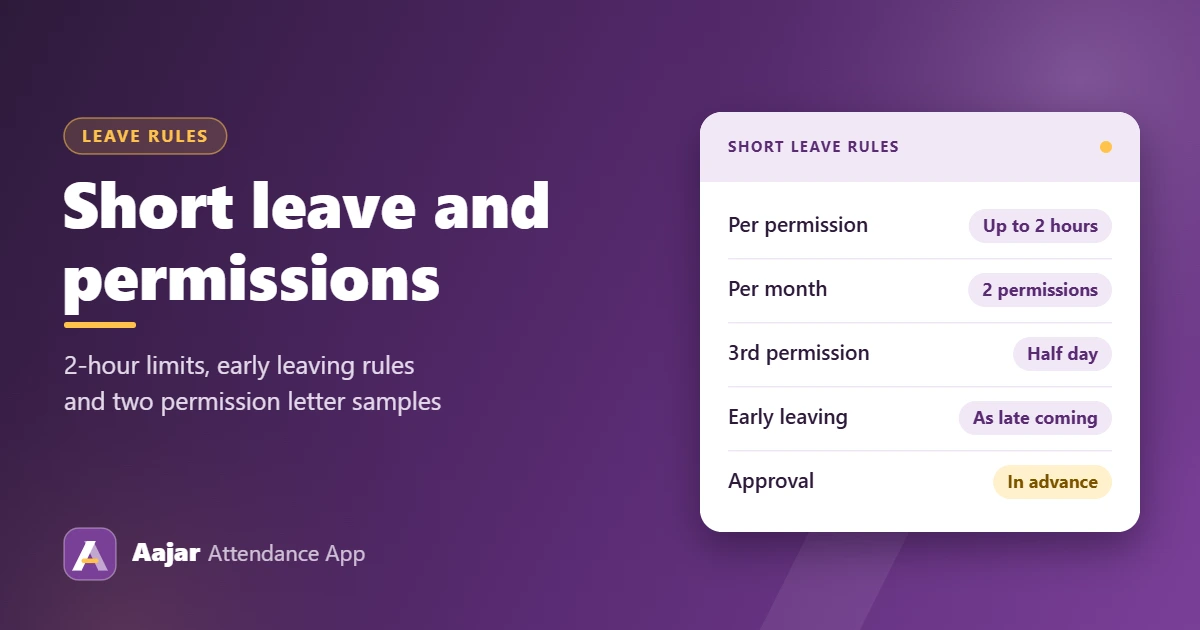
Short Leave in Office: Rules, Limits and Permission Letters
How 2-hour permissions, monthly limits and early leaving work, how to record them, plus two permission letter samples for office.